Sunday, February 12, 2017

March Work in February

We had a very nice weekend so I skipped Something Rotten at the Fox in St. Louis. After a long delay, I finally scheduled my ACL repair for a couple of weeks from now. There are only so many opportunities to get this work done.


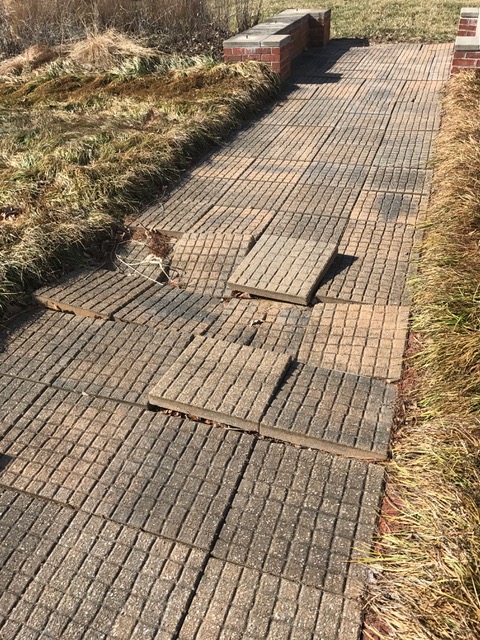
When the painters did their work last fall, they brought in a huge bucket lift which destroyed the walk to the old arbor. The first item of business was to reset the pavers.


Then we got all of the grasses cut back. This is a job which used to take a couple of days. With the Grasshopper, it takes a couple of hours.

I'm going to receive around 120 vines in March and April. While I have some good friends who have volunteered to help plant, I felt as if it was my duty to get the holes dug ahead of time. I rented a small backhoe and it took about 4 hours.


On Sunday we cut back the beautyberries and cleaned up. Now we just need some grapes.

Sunday, February 5, 2017

2016 Wines - Chapter 12 - Elderberry Rosé

Final chapter for 2016. Some passion fruit which will go toward a one gallon batch when all of the 2016 passion fruits have been harvested, but it cannot be counted as a 2016 wine, as some of the fruit is left over, frozen from 2015. There are some elderberries, blackberries, and blueberries left, but I'm out of carboys and low on inspiration.

This is the third year for elderberry "seconds" wine. Last year's wine had some blackberry, and it was pretty good, earning a bronze medal at the Wine Classic. But I judged the 2014 version superior, and it was all elderberry. Therefore, I started with the idea of dialing back the blackberry this year. But because I tweaked the first runs of both wines, it wound up with even more blackberry this time than in 2015. That may be fine, as the comments from the Wine Classic indicated the elderberry dominated the 2015 version; more blackberry should be welcome.

We used seconds from the 2015 elderberry wine, which started with 15#, and half of the seconds from the 2015 EB. All told, it used seconds from 21# elderberry and 14# blackberry. Also included were 3# bananas, simmered and strained; 46oz can of Alexanders Sauv Blanc concentrate, 1735g sugar, 11.5qt water, 3g Booster Blanc, 6g Opti White, 3tsp pectic, and 0.3g Lallzyme EX.

Banana water
Initial SG was 1.086, spot on. The pH started at 4.07, down to 3.41 with 3t citric and 1t tartaric. Pitched K1-V1116 and it was off to the races.


I kept this in the basement most of the time, hoping to keep the fermentation cooler. Step fed with Fermaid K and added some bentonite on day 3. The Lallzyme is a new addition, and I think it worked, perhaps too well. I racked today to carboy at 1.015, and this wine has a ton of pulp.

Cleaning this carboy will be interesting

Next Steps

This year I entered 6 wines in the Greater Kansas City Cellarmasters Wine Classic. We earned 3 medals: Silver for Lychee Wine, and bronze for 2015 Elderberry Rosé and Lemongrass Mint. Two others didn't medal but earned nice comments. But I learned that I must open and sample every wine before sending, as the blackberry had gone bad. I hadn't tried it in the months since bottling, and while it wasn't great at bottling, it is awful now. It oxidized and developed the geranium smell. Fortunately, there were only two remaining bottles, and now nobody can be considered at risk from this wine any longer.


I'm conducting an elderberry wine experiment. I have three 1 gallon batches of elderberry, the making of which is detailed elsewhere. I racked these three today and added kmeta. Lots of red fruit from the simmered solution and the pressed fruit batches, particularly cherry from the pressed fruit. The batch which was fermented on the fruit has the least aroma and is most characteristic of elderberry.


The greenhouse is still sleeping for the winter. We are eating, rather than fermenting, this year's citrus crop. The only exciting news to report is our first grapefruit harvest.


Double A Vineyards notified me that they don't have enough Norton to fill my order. Apparently this is a very popular grape right now. I was able to get another 25 vines from a place in Arkansas. If I actually receive all of the Norton I am still promised, it will fill the remainder of the available trellis space.

Saturday, January 14, 2017

Making Repairs

The 2017 Icepocalypse has, so far, not materialized. In fact, some of the ice is melting today. The power is still on, and while we can't do anything outside, we can get plenty of winemaking done inside.

A patient brought me 30# of blueberries. The circumstances of the acquisition are suspicious but I didn't ask too many questions.


I already have a straight blueberry and a blueberry rosé in the carboy, so some of these berries are going into a quickie blueberry lemon wine.


This wine will be a quick, early drinker. It is not even worth a chapter, it's pretty cookbook. The rest of the morning was spent remedying various wines which have gone off the track.

Another patient gave me a huge batch of Arkansas Black apples. I pressed them off and made a straight juice, no water, Arkansas Black wine. The wine had been cleared, stabilized, and satisfactorily backsweetened, but it still had a musty smell which kept me from putting it in a bottle. Then I stumbled across this slide deck from Dominique Delteil detailing the use of Noblesse to clean up various problems in wine. The apple got 1g of Noblesse and astonishingly, it is much better. It's more "appley" with a longer finish and little to none of the mustiness it had before. Now I just have to clear it again before bottling.


The problem with the 2016 Blueberry wine was acidity. A pH of 3.07 might be fine for a Sauv Blanc but this wine was like eating a blueberry Sweetart. I've never used any post-ferment KHCO3, but this wine needed help. We bench trialed KHCO3 additions and landed on 1.5g/L. I treated the whole batch and cold stabilized it. Today I racked it; the pH is 3.37 and it is much smoother. I'm not yet sure that I didn't kill the aromatics and make it flabby.


The 2016 Syrah was made from California grapes. This wine has a couple of issues. First, it ended up too light. I should have cold macerated it. But for a light red it will be fine. The bigger problem is a lingering bitterness. The only thing I can think of is that maybe I overpressed it. I fined a portion with bentonite and albumin and it worked as advertised, the bitterness is completely gone! I treated the 5 gallon batch last weekend and today I racked it off the lees, with a plan to bulk age this until next fall. I have 8 gallons, and I intend to bottle some and use the rest for blending with elderberry and Chambourcin.


The biggest problem is the 2016 Lemongrass Mint wine. It developed a slight off odor during fermentation which seemed to improve with splash racking. However, a month later the smell was back, worse than ever. I suspected a H2S problem. I tried the usual splash racking and sulfites, no joy. I then treated it a month ago with Reduless which initially didn't seem to do a thing. I was one step from pitching this wine when today I went back to recheck it and lo and behold, it was much better! Not perfect, but improved. I racked it off the Reduless and dosed it with Noblesse to try to finish the cleanup. My last trick was going to be ascorbic acid and copper, but I may not have to do that.

The rest of the 2016 wines are coming along nicely. I have one more batch of elderberry rosé and that will be about it. It's a good thing, too, because I'm out of carboys and airlocks.

We have one more wave of freezing rain tonight, but we are no longer in the "crippling" zone and based on the appearance of our roof, I'm thinking we dodged a bullet.
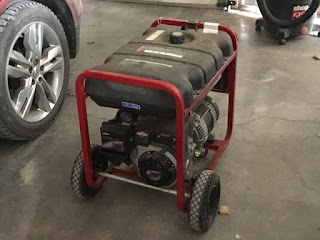
I hope I don't need this

Friday, January 6, 2017

Fig Wine and Kansas City Cellarmasters

It is unlikely that my first fig wine will be entered in any wine competitions. But earlier this week I entered 6 bottles in the Kansas City Cellarmasters 2017 Wine Classic. From 2015, I submitted my blackberry, EB, lychee, lemongrass mint, and elderberry blush; from 2014, I sent the elderberry. Fingers officially crossed. 

Several months ago, Barb informed me that she had more figs than she could use. She kindly vacuum packed them and shipped them from Texas frozen. She has a white variety. I combined them with a small number of Chicago Hardy I grew in the greenhouse for a total of 6.5# of fruit.


The fruit was minced in the food processor.


I combined with 7.5 pints water, 0.2g Lallzyme EX, 1.3g Booster Blanc, 2g Opti White, 1/2t tannin, and 1kg sugar.


The pH was 6.06, adjusted to 3.64 with 1.5t tartaric and 0.5t citric acids. SG was 1.088. I used K1-V1116, my go-to yeast. I used some old energizer and nutrient because on the day I pitched the yeast I was feeling lazy. I fermented to dry in only about 5 days. I strained the fruit out, hit it with Kmeta, and moved it to carboys at 1.000. It is still fermenting, and I'll let it go another couple of days, then rack off of the gross lees and reduce the head space. 


I can tell already, this won't be a stellar wine. It's all about managing expectations.

Tuesday, January 3, 2017

2016 Wines - Chapter 11 - EB

Saying "Elderberry Blackberry" is awkward. I just call this wine "EB." I just today sent the 2015 EB to the Kansas City Cellarmasters 18th Annual Wine Classic. I like the 2015 version a lot, but now I've probably just jinxed myself out of a medal.

So it was time to make the 2016 EB. This time I changed the ratio from 40:60 to 30:70 and bumped up the fruit quite a bit, 12# of elderberries and 28# of blackberries.


The elderberries were simmered to reduce the green goo, and a few bananas added for body.


These were added to the blackberries...


...and everything was thawed, treated with Kmeta, and gently crushed. To this I added 1 cup heavy toast American oak chips, 6# sugar, Opti Red, pectic enzyme, and Lallzyme EX. The inital pH was 3.30, and I'm aiming for a smoother lighter red here, so I added 6 tsp of calcium carbonate. The SG was perfect at 1.090. Then it got a 3 day cold soak for the pectic and Lallzyme to do their thing.  

I used K1-V1116 on this wine, but now I'm regretting not using 71B. The ferment was extremely fast; it hit 27.4C and after only about 4 days was down to 1.008, so I pressed.


From 5.75 gal of must I ended up with 4 gal of free run and 1 gal of pressed wine. There is a lot of sediment however, and I expect to lose another gallon with the first racking in another week or so. 


Sunday, December 11, 2016

2016 Wines - Chapter 10 - Lemongrass Mint

As with the Chambourcin, I did not seek out this wine; rather, it found me. Lisa decided to clean out the lemongrass on the east side of the greenhouse. Naturally, I couldn't let it go to waste. I happened to have picked up a couple of weeks ago a 1 gallon Winexpert Pinot Grigio kit. This kit has 1.6l of PG concentrate, and I imagined that it would work well as a grape base for lemongrass ginger wine.


Ingredients for a 3 gallon batch with extra for topping:
650g fresh lemongrass
1 freshly picked Meyer lemon, juiced and zested
1.6l Winexpert Pinot Grigio concentrate
100g of mild crystalized ginger
44g of strong crystalized ginger
1/2tsp tannin
6g Opti White
3g Booster Blanc
3t pectic enzyme
2kg sugar
2.25tsp citric acid

I prepped the lemongrass stock as I have done before, simmering it twice with the ginger. The stock was drained into the primary and the lemongrass/ginger added to a mesh bag, along with the lemon zest.


The bag was added to the primary, along with the concentrate, and water to 3 gallons. Once cool, the rest of the ingredients were added. pH adjusted from 4.04 to 3.39 with the citric acid. SG went from 1.030 to 1.085 with the 2kg of sugar.

The next day I rehydrated the EC-1118 that came with the kit, and it turned out to be my first case of nonviable yeast. I didn't get any bubbling in the starter like I usually do. I pitched it anyway, and predictably, nothing happened. I suppose the yeast was killed while sitting in the kit somewhere. So I sprinkled K1-V1116 and it took off within a couple of hours. I step-fed Fermaid K and got a nice even ferment and on day 7 at 1.010 I racked it to the carboy.


I will add Kmeta in a couple more days. This wine smelled great during the entire fermentation. It will make a nice drink for summer 2017.